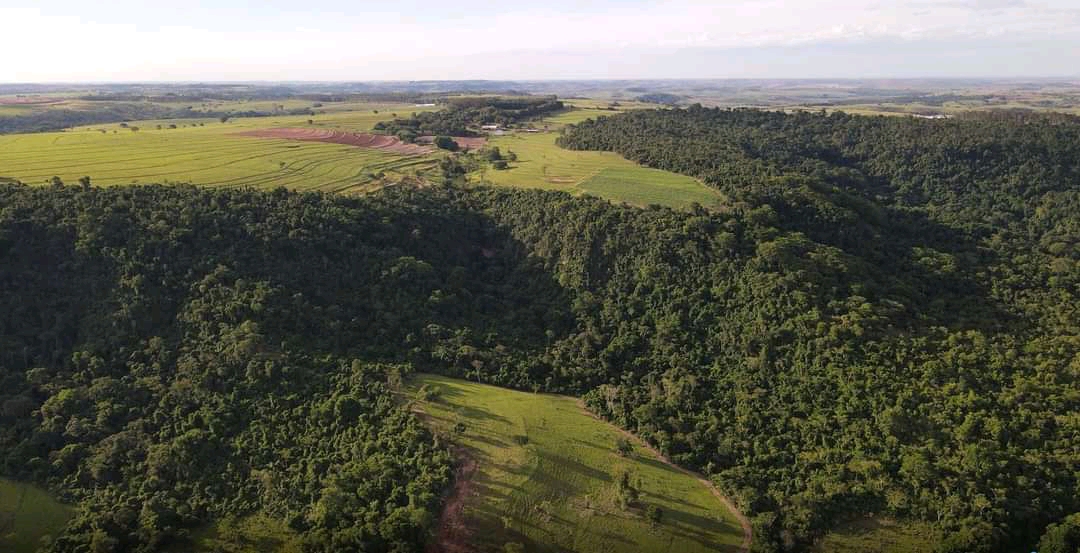
Fazenda Guaiuvira stands out for its rich history and environmental commitment, with nearly a century dedicated to sustainable farming and biodiversity preservation.
Since its foundation in 1927, under the pioneering vision of Dr. Mário de Andrade Bastos, the farm has remained a symbol of ecological responsibility and innovation in the Pompéia region, São Paulo.
The forest cries for help
The Guaiuvira and Água do Cedro farms were severely impacted by the wildfires that hit the state of São Paulo in August/September 2024.
Despite the support of volunteers, residents, and public agencies, a large portion of our native forest was devastated.
Tradition and Sustainability
With a history that predates the founding of Pompéia itself, Fazenda Guaiuvira has preserved agricultural and environmental traditions for generations, maintaining cultivation and management practices that respect and care for the local soil and water. Starting in the 1970s, the farm introduced contour plowing—an innovative practice at the time—aimed at reducing erosion and conserving soil quality. This care continues today, demonstrating Guaiuvira’s commitment to the longevity and health of the land.
Biodiversity Preservation
The native forests of Fazenda Guaiuvira and Fazenda Água do Cedro are home to a wide diversity of fauna and flora, including apex predators. This indicates a healthy ecosystem that serves as a vital refuge for local species. With the help of biodiversity studies conducted by the firm WALM, the farm maintains documentation of the positive impact of its preserved area, being recognized as a sanctuary of life for the region.
Environmental Services for the Community
The forests of Guaiuvira and Água do Cedro offer important environmental services that benefit the surrounding community, contributing to air quality, humidity control, carbon sequestration, pollination, and the maintenance of water resources. These areas also help regulate the local climate and reduce the impacts of extreme weather events, acting as a “green lung” for the entire region.
From Destruction to Restoration: Our Recovery Journey
Recovery is possible, but it will be a long and difficult process, especially with worsening climate conditions.
We are currently planting seedlings, spreading seeds, and accelerating production in our nursery. We count on your help to continue this work and speed up the regeneration of our forest.